What Is The Difference Between Repairs And Home Improvements
Repairs
IRS describes “repairs” as any modifications necessary to bring a property/home to its original condition or state. Repairs don’t add any value to your home, and tax laws do not treat repairs as a deductible expense. But, there are some exceptions, such as rental properties or home offices under your ownership. A typical example of repairs includes installing/replacing a window screen.
Improvements
IRS describes “improvements” as a modification or upgrades that;
- Prolong your home’s life
- Significantly adds value to your home
- Adapts your house to new uses
In short, home improvements are an investment that increases the value of your home. Common examples of home improvements include adding new bathrooms or bedrooms to your house.
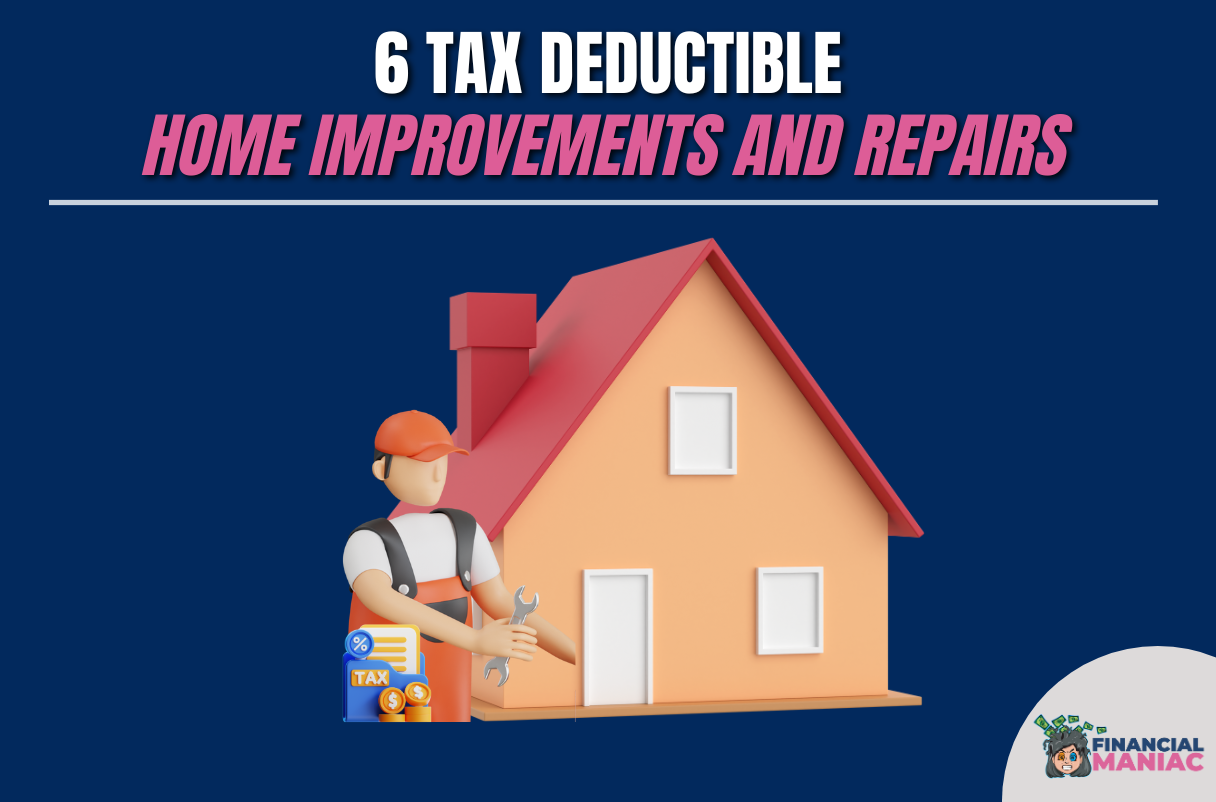
Most importantly, home improvements are tax-deductible, and below, I will go over the 6 tax-deductible home improvements that you can make.
6 Types of Home Improvement Deductions
1. Energy-efficient home improvements

You can undertake different types of improvements to make your home more energy-efficient.
For instance, the following energy-efficient improvements are tax-deductible;
- Self-powered water heaters (that are able to heat at least 50 percent of the water in the home.)
- Geothermal heat pumps
- Solar energy systems
- Small wind turbines
- Double-paned or triple-paned energy-efficient windows.
These improvements are already a built-in feature in modern homes. However, it is essential to note that you can only claim a tax credit on energy-efficient home improvements.
An energy-efficient tax credit is available for older houses, newly constructed houses, and rental properties. Also, homeowners can claim this tax credit in the same tax year.
2. Medical Care Home Improvements
Medical expenses can be very tiring for anyone, and if you have to make necessary improvements for medical reasons, this can be an added burden. The good thing is you can claim tax deductions for these improvements.
However, these expenses are only deductible if you incur them to get medical care for;
– Yourself
– Your spouse
– A dependent
Moreover, the cost of maintaining or operating these improvements is also deductible.
Here are tax-deductible home improvements based on medical care;
- Exit ramp and building entrances
- Wheelchair ramps
- Shower handrails
- Widening hallways and doorways
- Modifications in smoke detectors and fire alarms
- Lifts installation
- Modifying or lowering kitchen cabinets
Lastly, medical-based home improvements are tax-deductible in the same year.
3. Making improvements to your home office

A home office is a place that you use specifically for work/business purposes.
However, home office improvements are tax-deductible only if;
– Your place is exclusively and regularly used for business/work purposes.
– Your home is also your primary space for your business.
That means employees who work in separate spaces (don’t work in their employers’ workplaces) are not eligible for this deduction. But, most importantly, both repairs and improvements to your home office are tax-deductible.
Nevertheless, repairs are only deductible in the same year incurred, while improvements are depreciated over time.
Here is a list of tax-deductible for home office improvements and repairs;
- Flooring, lighting, new paint
- Improvements and repairs that are directly made to the home office.
- Repairs and some improvements made to the other parts of your home are partially tax-deductible.
4. Rental Property Improvements
Improvements or repairs rules are different for rental properties. Like home offices, any repairs or improvements you make in your rental property are tax-deductible.
Improvements, including kitchen remodeling, bathroom renovation, replacing appliances, are a valuable addition to your rental property, and you can depreciate them gradually.
On the other hand, repairs are only tax-deductible in the same year.
The following is a list of tax-deductible rental property improvements;
- Any upgrade to the property
- Adding new rooms in the rental property
- Any repairs expenses necessary to keep the property in properly useable condition.
5. Home Improvements For Resale Value

Any expenses you incur as capital home improvements to increase the value of your home are also tax-deductible.
However, you cannot claim the full deduction in the same year these improvements were made because of your property’s long-term value. Instead, you can depreciate the expenses over the next few years.
Some improvements may take more or less time, and it is important to follow the depreciation schedule for different types of renovations.
It is highly recommended to consult the guidelines from the IRS to claim these deductions.
Here is a list of tax-deductible resale-focused for home improvements;
- Installation of a swimming pool
- Adding a new bathroom
- Installing a new furnace
- Finishing an attic
- Finishing a basement
6. Casualty and Theft Repairs And Improvements
Deduction claims on damages caused by natural disasters are trickier. For example, suppose you have incurred expenses on necessary repairs because of a natural catastrophe. In that case, you can claim tax deductions only if the President of the United States has declared it as a disaster (federally declared disaster).
It is not a typical tax deduction and you will have to itemize your deductions.
But, if you have received reimbursement from your insurance company, you won’t be eligible to claim these deductions.
I hope this helps, Looking forward to joining you all in this journey to Financial Freedom & Education!
This material has been prepared for informational purposes only, and is not intended to provide, and should not be relied on for, tax, legal, or accounting advice. You should consult your own tax, legal, and accounting advisors before engaging in any transaction.